MERDEKA! MERDEKA! MERDEKA!
It would be impossible for any Malaysian not to be familiar with those sacred words. Mestilah pernah dengar, kan? Every year, especially in August, we’d see people waving the Jalur Gemilang a bit more frequently along with the symbolic chant. Speaking of, tak percaya kita ni dah Merdeka for 66 years. Fulamak.
Still, many people would consider 66 to be quite a young age for a country. Tapi kita dah witnessed a number of remarkable achievements happening on our turf, particularly in the medical sector. So, to commemorate our nation’s 66th Independence Day, we at Healthlah nak share 6 pivotal stories that symbolise how far we’ve come — some of which might even take you by surprise. Dah sedia? Ayuh, bersatu dan maju!
N95 Mask

Remember the dreadful lockdown? Yup, we hate that period too. Nevertheless, one item in particular rose to prominence amidst the chaos: face mask. Haa ni nak cakap sikit ni, did you know that the early prototype of such protective equipment was made by a Malaysian? Ha, jangan tak percaya!

Meet Dr. Wu Lien-Teh, an epidemiologist who was born in 1879 and hailed from Penang. He was responsible for developing a surgical face mask that is widely regarded as the ancestor of the N95 mask used today. The story of why he came up with such an idea can be traced back to the 1911 Manchurian plague that hit northern China. To determine what caused it and the best treatment method, the Chinese Imperial Court asked Dr. Wu to go to ground zero and study the plague. Uish, seram bunyi. After realising the disease was airborne and not transmitted by fleas, macam ramai orang percaya, he created a tougher mask out of gauze and cotton that fit snugly around the wearer’s face and included extra layers of fabric to filter inhalations.
Long story short, it worked, and the rest is history. From the 1918 Spanish flu all the way to the recent COVID-19, the variations of Dr. Wu’s mask played a significant role in saving many lives. As a result, he became the first Malayan to be nominated for a Nobel Prize in Physiology or Medicine. He even got his own Google Doodle back in March 2021, long after his passing in 1960. Hebat kan?
Malaria Control

If you despise dengue fever, chances are you might feel the same towards malaria too considering both illnesses spread via mosquito bites. That’s why it’s not surprising to witness such troubles in tropical countries including Malaysia (dah nama pun nyamuk, kan).
Well, malaria fever began in the early 20th century when a severe epidemic happened in Klang (looks like gagak wasn’t the only thing the place was infamous for) which caught the attention of the Selangor state surgeon at that time, Dr. Malcolm Watson. With government aid and a $30,000 Sanitary Board grant, he initiated mitigating measures in the area, and by 1907 he resigned from government service and focused on malaria control.
Dr. Watson discovered the vector for the disease and devised methods to interrupt its life cycle, including drying up breeding sites, building bunds, and killing young larvae with oil. Thanks to his initiative, Malaya had the distinction of being the first nation to successfully apply an understanding of the mode of transmission of malaria toward the goal of effective prevention and control Wow, tak sangka kan? As of today, malaria is almost non-existent in the country with only a low level of risk in rural parts of Sabah and Sarawak. Phew, nasib baik!
Arm-And-Hand Transplant

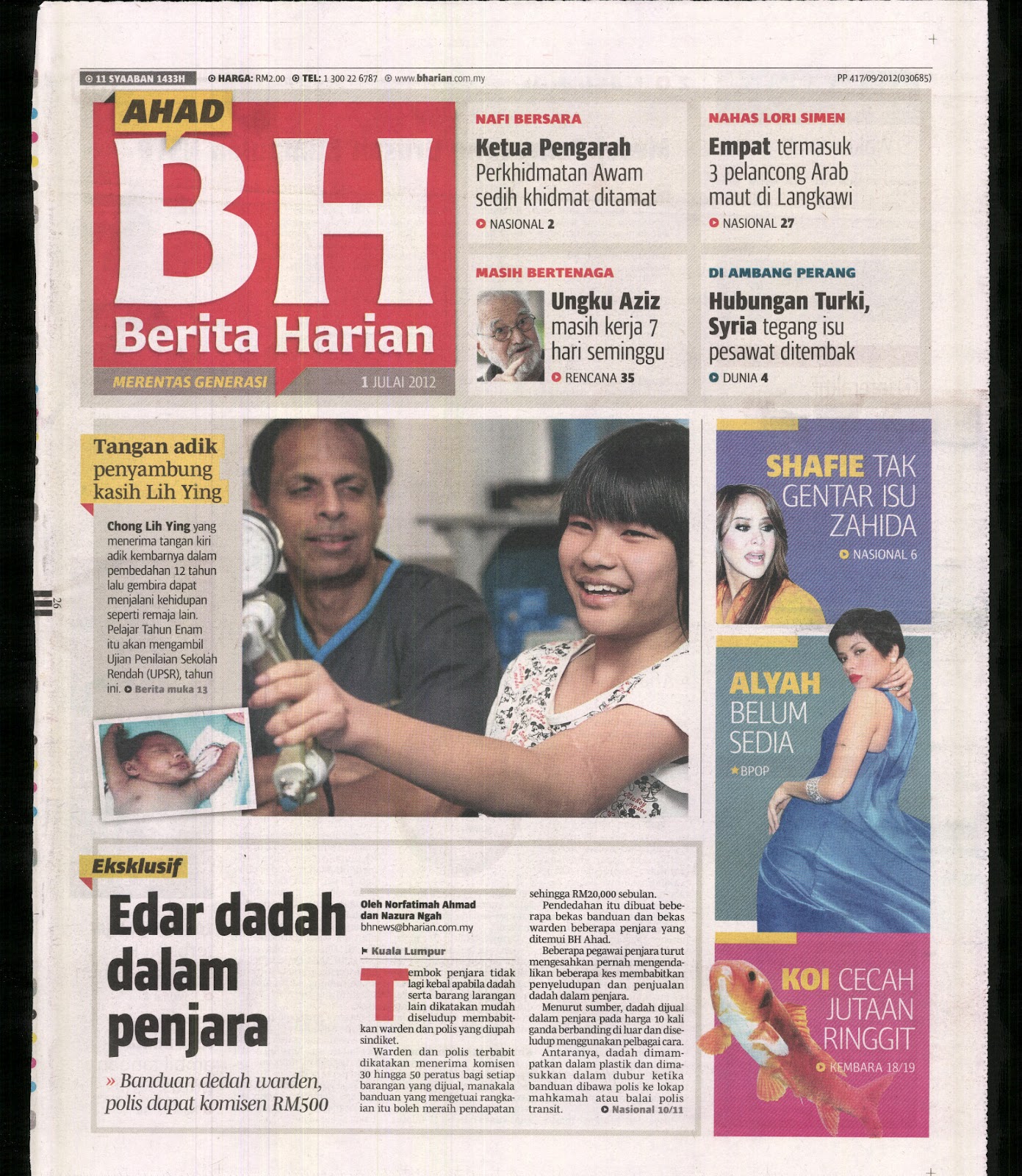
Another history-making moment that brought global attention to Malaysia took place on May 18, 2000. Dr. V. Pathmanathan and his team of surgeons at the Hand Surgery Department, Selayang Hospital performed what was considered the world’s first “arm and hand transplant” on Chong Lih Ying who was then just a month old. Ceritanya macam ini: She had no left arm at birth but since her twin, Lih Jeng, suffered from a brain abnormality (which, unfortunately, shortened her lifespan), the surgeons decided to harvest and transplant Lih Jeng’s limb to Lih Ying instead.
Nevertheless, no anti-rejection medication was needed because they were both identical twins and in the end, the world’s 9th successful hand transplant was completed. Fast forward many years later, Lih Ying grew up to be a healthy kid and even managed to sit for her UPSR exam back in 2012. You go, girl!
Elimination Of Mother-To-Child Transmission

Alright, let’s be honest: most of us would immediately think of HIV and syphilis as a form of sexually transmitted disease (STD), but the reality is they could be passed down through pregnancy too. Sebab tu lah Malaysia made an effort to introduce antenatal HIV screening as early as 1998. All women in this country nowadays practically have access to high-quality health care, such as contraception and deliveries monitored by trained attendants, as well as free prenatal screening and medical care.
Such a meticulous strategy eventually paid off in October 2018 when the World Health Organization (WHO) recognised our nation as the first in the Western Pacific region to be recognised as having eradicated the mother-to-infant spread of syphilis and HIV. For the record, the region WHO refers to consists of 37 countries and areas. Just imagine being no. 1 in a group of 37 people… that’s basically an Asian parent’s dream.
Compulsory Licences For Antiretroviral Drugs

Every time you plan to buy a medication at a local pharmacy, you will certainly check all the labels and make sure it’s safe for consumption (unless it’s paracetamol which, for some reason, most of us simply purchase just to maintain the supply quota at home; mengaku sajalah, ya).
Dealing with the sale of medicinal drugs requires the authority to dictate specific codes and regulations to protect the well-being of members of the public. That’s why in accordance with the Trade-Related Aspects of Intellectual Property Rights (TRIPS) Agreement administered by the World Trade Organization (WTO), Malaysia became the first nation to grant a mandatory import license for generic antiretroviral medications in 2003.
This means anyone who wishes to market such substances here must possess proper licensing which can only be obtained through detailed screening. Bila peraturan dan ketat, barulah rasa lebih selamat. Tak gitu?
Medical Tourism

Kalau ada yang tak tahu, medical tourism is basically when someone travels to another country for the sake of receiving preferable healthcare. Anyway, Malaysia has been one of the major hotspots in Asia for this matter. Between 2017 to 2019 alone, we welcomed no less than 1 million medical tourists each year with cardiology and fertility being the most sought-after treatments. Menarik, kan?
According to recent research, there is a strong government presence in the market – through the establishment of the Malaysia Healthcare Travel Council (MHTC) – and a strong public-private healthcare partnership contributes to our extraordinary growth. Aside from our status as a global Halal hub that draws much interest from international Muslim visitors who seek Halal-certified treatments, the famous Malaysian hospitality and the fact that many health practitioners here are fluent in English are also some of the key reasons why people choose this country in the first place (and TBH, our Ringgit exchange rate might have something to do with it too *huhu*).
Ha, bangga tak? See, we’ve come a long way from our humble beginning more than six decades ago (perhaps even earlier than that). If there’s one key takeaway you could reflect on, it’s that Malaysia might still be a developing country but all these fantastic anecdotes show that there’s still hope, and room for us to continue to progress forward in the healthcare field.. So, let these achievements inspire us as well as the next generations to elevate our nation’s status on the global stage Dirgahayu Malaysia!
Seronok baca? Jomlah! Get instant alerts on how to take charge of your health by subscribing to our newsletter. Time to fill your inbox with all the T’s (topics, trends, tips and tricks, and tidbits) instantly!
Disclaimer: Our content is strictly for educational and informational purposes only. Healthlah.com does not provide medical advice, diagnosis, or treatment.